
Intel (INTC), AMD, and Qualcomm shares fell on Monday after Nvidia unveiled its new RTX Spark PC chip, designed to run AI agents directly on personal devices.
The launch challenges Intel and AMD’s long-standing dominance in the PC chip market while also increasing competition for Qualcomm, which has been expanding its portfolio of AI-focused processors.
Intel shares had fallen more than 4%, while AMD had slipped over 3%.
Qualcomm led the declines, shedding more than 6%. All three stocks had recovered somewhat from steeper losses seen earlier in the trading session.
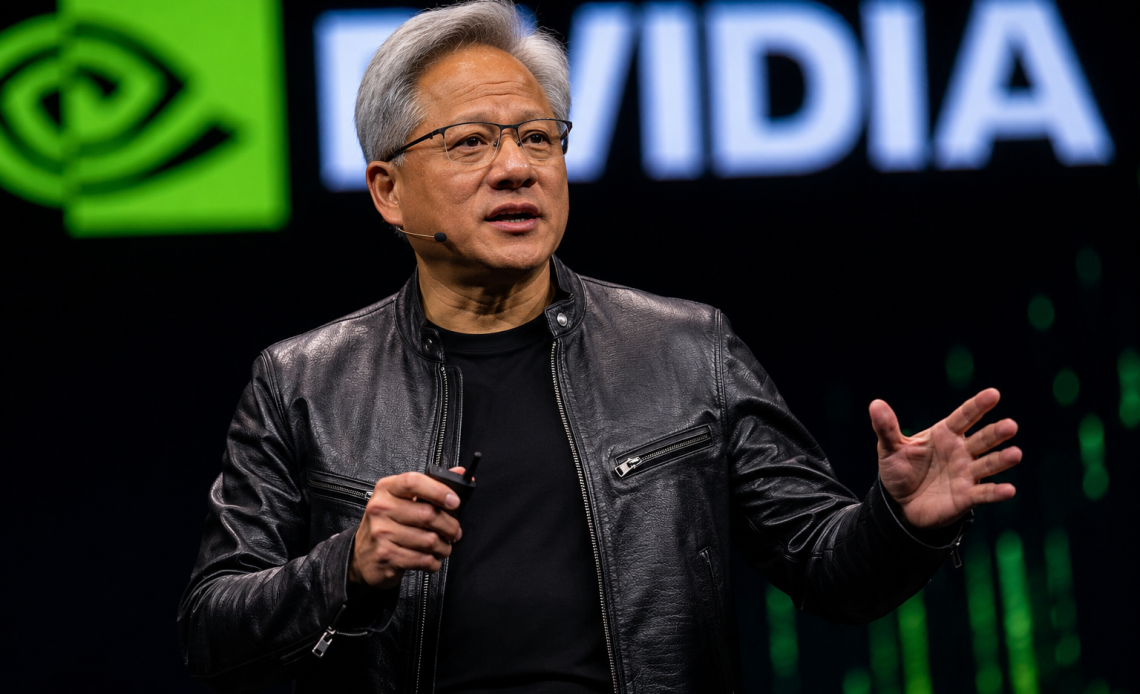
The selloff followed Nvidia’s announcement at Computex in Taiwan, where Chief Executive Jensen Huang outlined the company’s latest push beyond data centers and into consumer computing.
RTX Spark is designed to bring advanced AI capabilities directly onto personal devices, allowing AI agents to perform tasks locally rather than relying entirely on cloud infrastructure.
The move positions Nvidia more directly against traditional PC processor leaders Intel and AMD, while also increasing competition with Qualcomm, which has invested heavily in AI-focused processors for Windows devices.
Expanding beyond the data center
Nvidia already sells the DGX Spark workstation, a desktop system aimed at AI engineers and priced at $4,699.
The newly unveiled RTX Spark chip, however, targets mainstream personal computers, albeit likely at the premium end of the market.
The company said it is working with major PC manufacturers, including Microsoft, Dell, and HP, with plans for roughly 30 laptop models and 10 desktop models powered by the chip.
RTX Spark-powered systems are expected to begin shipping this fall from manufacturers including ASUS, Dell, HP, Lenovo, Microsoft, and MSI, with Acer and Gigabyte joining later.
The announcement reflects Nvidia’s broader effort to extend its dominance in AI computing beyond servers and data centers into everyday devices.
“One hundred percent of the world’s PC industry has joined us to reinvent the PC,” Huang said during his keynote presentation.
PC makers are increasingly betting that AI features will encourage consumers and businesses to upgrade devices as generative AI becomes more integrated into everyday workflows, from drafting emails to conducting research and planning projects.
That trend is already beginning to show up in sales data.
HP said last month that AI PCs accounted for 44% of its second-quarter PC shipments, up from more than 35% in the previous quarter.
Pressure mounts on rivals
The announcement was particularly notable for Intel, whose x86 architecture has long dominated the PC market.
Independent analyst Richard Windsor said Nvidia’s presentation sent a strong message to established rivals.
“This was a better-than-average keynote from Jensen with plenty of new announcements, as well as keeping his rivals in their place,” Windsor wrote in his Radio Free Mobile blog.
“Top of this list is Intel, whose x86 architecture was effectively called out as obsolete in both the data center and the PC, both of which are Intel’s core markets.”
AMD also faces potential challenges if Nvidia succeeds in attracting premium laptop buyers, content creators, and developers seeking powerful local AI capabilities alongside traditional computing performance.
While Nvidia’s architecture is based on Arm technology rather than x86 processors, analysts say the company could still erode AMD’s position in the high-end notebook market if adoption gains traction.
The move also intensifies competition with Qualcomm, which has been promoting its Snapdragon-powered Copilot+ PCs as a platform for on-device AI processing.
Adoption remains the key test
Despite the excitement surrounding AI PCs, questions remain about how quickly consumers will embrace the category.
Market research firm IDC expects global PC shipments to decline in 2026 due to memory shortages, rising component costs, and broader supply constraints, even as average selling prices increase.
DigiTimes analyst Jason Tsai warned that Nvidia’s success may ultimately depend less on technology and more on pricing.
“The hardest question is not whether RTX Spark is technically ambitious, but whether it can become a product people actually buy in volume,” Tsai said.
According to Tsai, complete RTX Spark systems may need to reach the $1,500 price point to move beyond a niche audience.
Above that level, the product risks remaining a showcase platform rather than becoming a mainstream alternative.
The broader ambition mirrors Apple’s success with Apple Silicon, which demonstrated how tightly integrated hardware and software could reshape the laptop industry.
Nvidia is now attempting to deliver a similar model for the Windows ecosystem.
Whether consumers embrace that vision at scale may determine whether RTX Spark becomes a disruptive force or simply another premium AI computing platform.
The post Intel, AMD and Qualcomm slide as Nvidia targets AI PC market with RTX Spark chip appeared first on Invezz